
Colleges and universities are under increasing pressure to do more with less. Budgets are tight, staffing is limited, and technology expenses continue to compete with other institutional priorities.
Yet some institutions spend $100,000 or more each year on academic advising and student success software.
Is your institution getting its money’s worth?
The True Cost of Academic Advising Software
When evaluating academic advising software, the annual licensing fee is only part of the equation. Depending on the vendor, institutions may face additional expenses for:
- Implementation and setup: Configuring the system to work with existing campus technology.
- Data integration: Connecting student information systems and importing academic records.
- Training and support: Helping faculty, advisors, and administrators learn the software.
- Customization: Adapting the platform to unique degree requirements, policies, and workflows.
- Ongoing maintenance: Updates, upgrades, and technical assistance.
These expenses add up quickly, particularly when institutions rely on outside consultants or dedicated IT staff to maintain their advising systems.
But expensive software isn’t necessarily better software. Colleges and universities deserve effective advising tools without paying an enterprise-level price.
A More Affordable Alternative: FlightPath
FlightPath was designed to provide colleges and universities with powerful academic advising and student success tools without the enormous expense associated with many enterprise platforms.
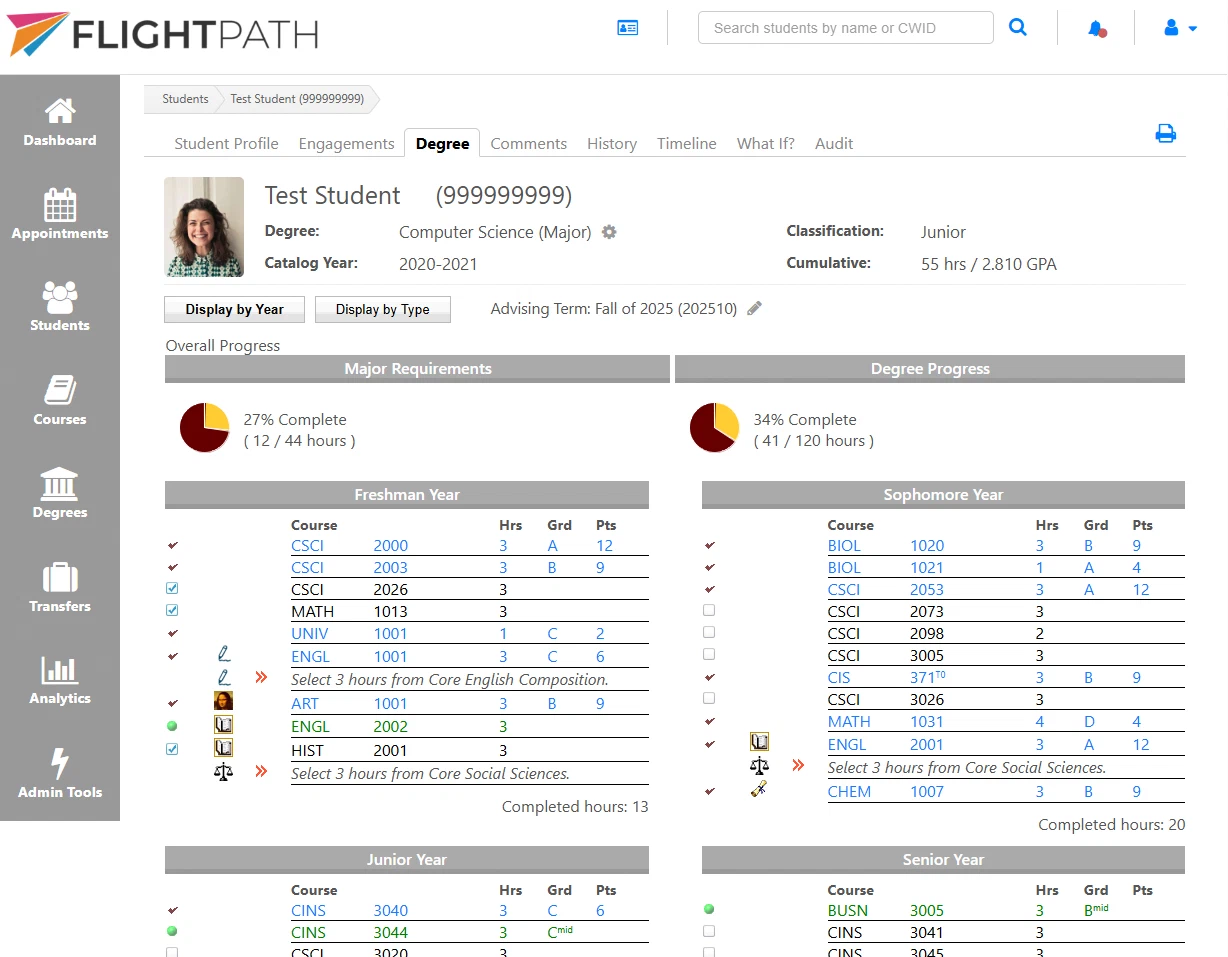
Rather than charging a separate implementation fee, FlightPath includes implementation in its straightforward annual pricing. We also handle hosting, software updates, maintenance, and ongoing support, reducing the workload on your institution’s IT department.
Despite its lower cost, FlightPath offers a comprehensive set of features, including:
- Degree audits and academic planning
- What-If degree exploration
- Early alerts and at-risk student identification
- Advising notes and appointment scheduling
- Email and text messaging
- Institutional reporting and analytics
And when your institution has unique requirements, FlightPath’s flexible architecture allows us to customize the software to fit your needs.
How Does FlightPath Compare to Other Advising Systems?
If your institution currently uses an expensive academic advising platform, you have more affordable options than you realize.
We’ve put together detailed comparisons showing how FlightPath stacks up against popular systems, including Ellucian Degree Works, EAB Navigate360, and Stellic.
Explore our academic advising software comparisons to see how FlightPath measures up in features, flexibility, implementation, and cost.
Better Software Doesn’t Have to Cost More
The goal of academic advising software should be simple: help advisors work efficiently, give students a clear path to graduation, and provide administrators with the information they need.
Institutions shouldn’t have to sacrifice essential functionality to stay within their budgets.
If your college or university is approaching a software renewal or considering a new advising platform, FlightPath offers an opportunity to reduce costs without compromising on the tools your students and advisors depend on.