
Choosing courses and staying on track toward graduation can be complicated for college students. Degree requirements change, prerequisites have to be considered, course availability varies, and students may change majors or programs along the way.
Academic planning software helps colleges and universities bring this information together so students and advisors can build clearer, more informed academic plans.
What Is Academic Planning Software?
Academic planning software helps students and advisors understand what a student needs to complete a degree and plan the courses and requirements that will get them there.
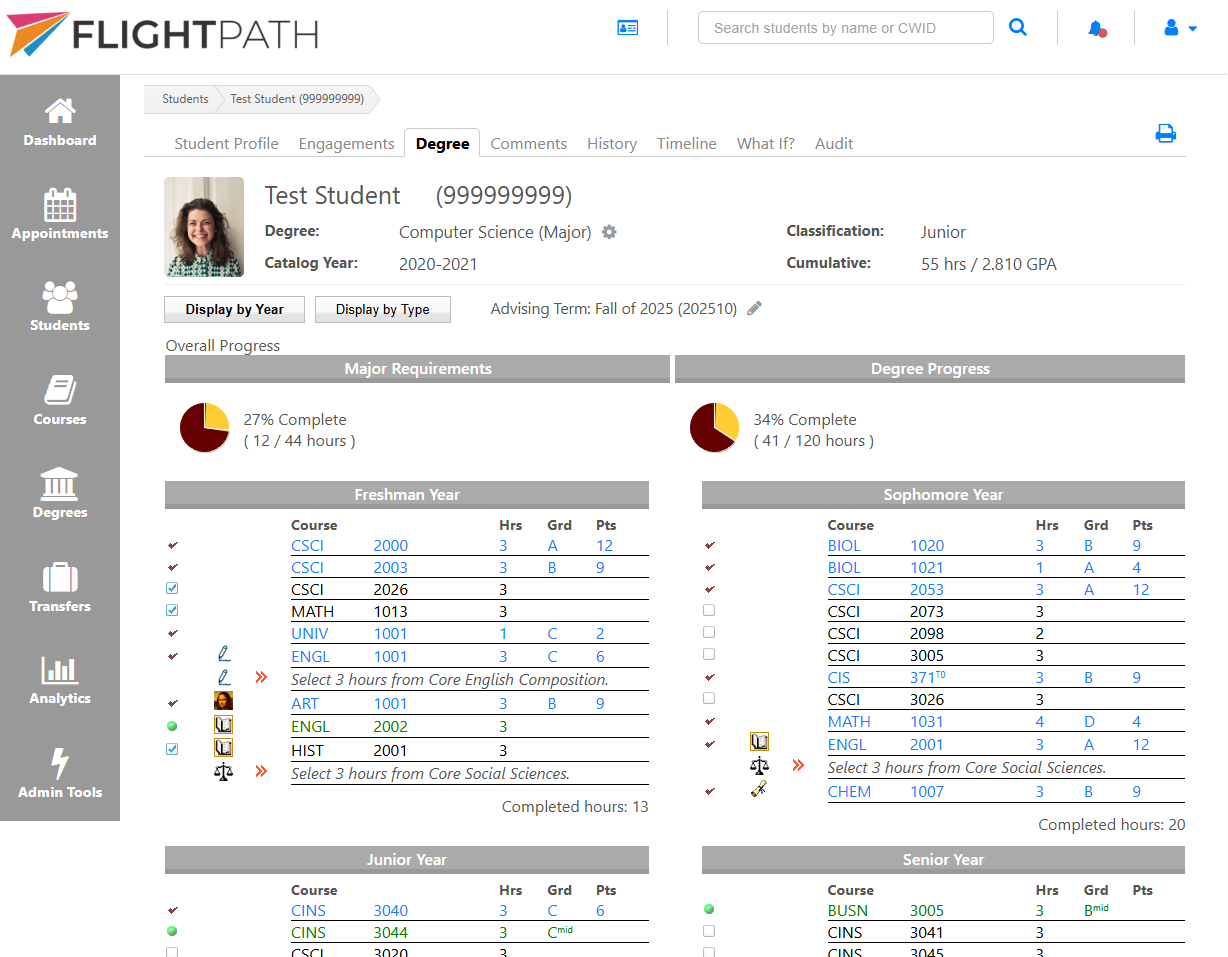
Degree auditing focuses on evaluating a student’s progress against degree requirements. Academic planning goes a step further by helping students and advisors determine what to do next and how to reach graduation on time.
A modern academic planning platform can combine degree requirements, course information, student records, and advising tools to give students and advisors a clearer path to graduation.
For more information about FlightPath’s capabilities, see our overview of FlightPath.
Academic Planning vs. Degree Audit
Academic planning and degree auditing are closely related, but they serve different purposes.
A degree audit evaluates a student’s progress against the requirements of a degree program. It can identify completed requirements, remaining requirements, and areas where a student may be off track.
Academic planning is more forward-looking. It helps students and advisors determine how to complete those remaining requirements and build a path toward graduation.
Put simply: a degree audit helps you understand where a student is. Academic planning helps determine where they go next.
The two capabilities work well together. Advisors can review a student’s degree requirements and progress, then use that information to develop an academic plan.
Why Academic Planning Matters
Without effective planning tools, students and advisors may have to piece together information from degree requirements, course schedules, student records, spreadsheets, and other systems.
Academic planning software can help institutions:
- Give students a clearer path to graduation
- Make course planning easier
- Help advisors identify potential problems earlier
- Help students understand the consequences of changing majors or programs
- Support more productive advising conversations
When students can see a clear path forward, advising becomes less about figuring out what a student needs and more about helping the student make good decisions.
Features to Look For in Academic Planning Software
Colleges and universities should consider several important capabilities.
Degree requirements: Planning should be based on the institution’s actual degree requirements so students and advisors can see how courses apply toward a degree.
Course planning: Students should be able to consider prerequisites, course sequencing, and the courses they need to complete each term.
What-if planning: Students change majors and explore different programs. What-if tools allow them and their advisors to explore those possibilities without disrupting the current academic plan.
Student and advisor views: Students need information they can easily understand, while advisors need the additional context required to provide effective guidance.
Early identification of problems: The system should help identify missing prerequisites, difficult course sequences, insufficient progress, and other issues that could delay graduation.
For a deeper look at proactive advising, see our article on how proactive advising improves student retention and student success.
Integration: Academic planning should work with the student information system and other campus systems rather than creating another isolated source of information.
How Academic Planning Supports Student Success
Students who understand what they need to accomplish can make better decisions about their coursework, while advisors can spend less time manually interpreting requirements.
Planning can also help advisors identify students who are beginning to drift from their intended path. When a student is missing an important prerequisite or falling behind the expected sequence, advisors have an opportunity to intervene before the problem becomes a graduation delay.
FlightPath combines academic advising, degree audit assistance, early alerts, communication, and other student success capabilities in one platform. Its academic advising software brings these capabilities together in a platform designed specifically for colleges and universities.
Choosing an Academic Planning Platform
The right platform should be easy to use, flexible enough to accommodate different programs and institutional policies, accurate, well integrated with existing systems, and adaptable to the institution’s advising process.
If you’re evaluating a broader academic advising platform, our guide on how to choose the best academic advising software for your institution covers additional considerations.
Academic Planning With FlightPath
FlightPath includes an Audit tab that assists advisors with reviewing degree requirements and student progress. Combined with its academic advising and planning capabilities, this gives advisors the information they need to understand where a student stands and help determine the best path forward.
FlightPath also combines early alerts, communication, and other student success capabilities in one platform, giving institutions a broader approach to keeping students on track.
A Clearer Path to Graduation
The right academic planning software gives students a clearer view of where they are, where they need to go, and what they need to do next. It gives advisors the information they need to provide more meaningful guidance and helps institutions identify potential problems before they become graduation delays.
Contact FlightPath Academics to learn more about how FlightPath can support academic planning, advising, and student success on your campus.