
Academic advisors work with a lot of information. Degree requirements, grades, course history, advising notes, alerts, and registration plans may all play a role in a single conversation with a student.
The problem is that this information is often scattered across several systems.
When an advisor opens a student record, they should not have to spend the first several minutes figuring out what is going on. The most important information should be easy to find, easy to understand, and useful for deciding what comes next.
FlightPath approaches the student record as a comprehensive view of the student, bringing important academic and advising information together so advisors can quickly understand where a student stands.
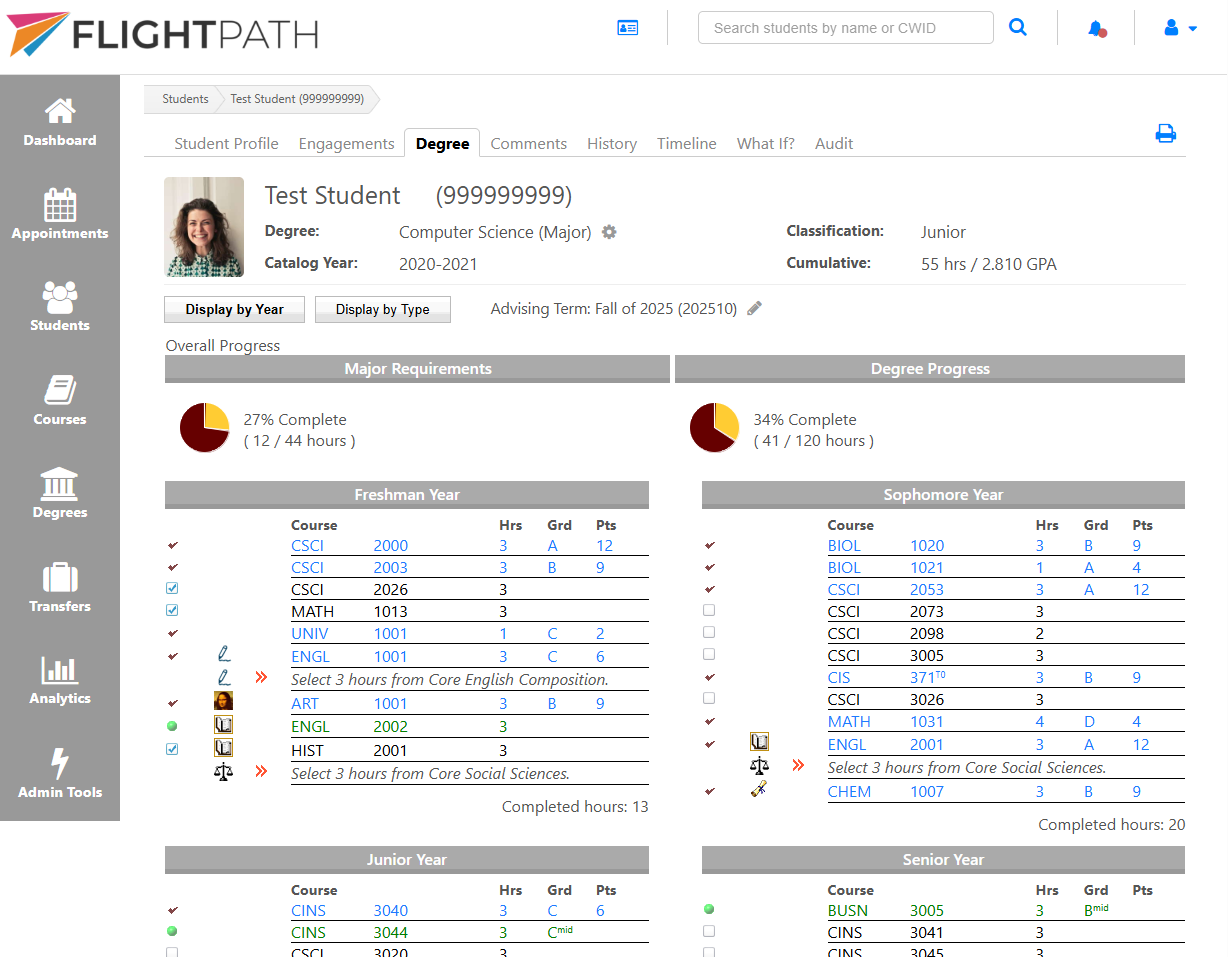
But what information belongs in that view? It starts with one of the most important questions an advisor needs to answer.
Where Is This Student in Their Degree?
The advisor needs to understand the student’s progress toward graduation.
That means more than simply displaying earned credit hours. Advisors should be able to see which degree requirements have been completed, which are still outstanding, and how the student’s completed and planned coursework fits into the overall degree.
A clear degree planning and advising system can turn a long review of transcripts and requirements into information an advisor can understand at a glance.
Is There Anything That Needs Attention?
A student can appear to be making progress while still showing signs that intervention may be needed.
Academic alerts, unsuccessful courses, unusual registration activity, and other indicators can help advisors identify students who may need additional support. The important part is putting those indicators where advisors will actually see them.
This is one reason FlightPath brings advising, degree progress, alerts, and other student success information together in one place. Advisors should not have to search multiple systems to discover that a student needs help.
What Has Already Happened?
Good advising depends on context.
Before meeting with a student, an advisor should be able to quickly review previous advising notes and other relevant history. What did the student discuss during the last appointment? Were there concerns that needed follow-up? Was a particular course or academic plan recommended?
Making that history readily available helps create continuity, especially when a student works with more than one advisor.
What Happens Next?
A useful student record should not only explain the past. It should help advisors and students plan the future.
That may include upcoming courses, remaining degree requirements, registration plans, or even exploring what would happen if the student changed majors.
The goal is to give the advisor enough information to move quickly from “Where is this student?” to “What should this student do next?”
A Student Record Should Tell a Story
The best advising systems do not simply collect data. They organize it into a useful picture of the student.
An advisor opening a student record should be able to quickly understand where the student stands, what needs attention, what has already been discussed, and what should happen next.
That is the philosophy behind FlightPath. Our academic advising and student success features are designed to put useful information in front of advisors without making them hunt for it.
When the right information is available at the right time, advisors can spend less time navigating systems and more time advising students.